From Lab to Life: How Phantom Neuro is Turning Sci-Fi Prosthetics into Everyday Solutions
Dr. Connor Glass, Founder & CEO of Phantom Neuro
15 minute read
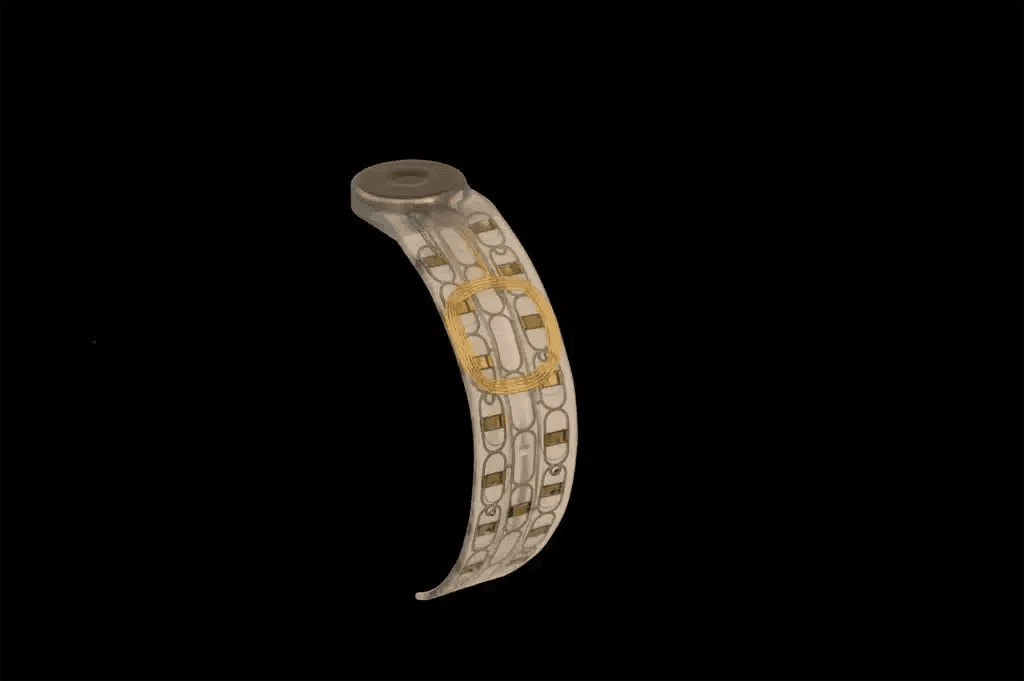
Phantom Neuro’s Array-Based Prosthesis Control System (ASCENT) study highlights 94% gesture accuracy, showcasing a breakthrough in intuitive prosthetic control.
By Connor Glass, M.D., Founder and CEO of Phantom Neuro
In the three years since I founded Phantom Neuro, our mission has been clear: to create a world where physical limitations no longer define people’s lives. Today, I’m excited to share the results of our ASCENT study, which demonstrate just how far we’ve come—and how close we are to delivering on this promise.
The ASCENT study tested our Phantom X platform, a minimally invasive neural interface system, under non-ideal conditions using surface sensors rather than implants. Even so, the results were remarkable: 94% accuracy in decoding real-time gestures across 11 predefined hand and wrist movements. These findings don’t just validate our technology—they underscore its potential to change lives, making once-hyped ideas like “Luke Skywalker arms” achievable for everyday users.
A Disconnect Between Hype and Reality
The field of human-machine interfacing has made incredible strides in labs. I’ve seen firsthand the astonishing demonstrations: amputees controlling prosthetic arms with near-natural precision, robotic exoskeletons enabling soldiers to lift superhuman loads, and brain-computer interface (BCI) systems translating thought into action. But what has all this achieved for real patients?
The reality is sobering. Despite billions of dollars spent and more than a decade of research, breakthroughs remain largely confined to the lab. A 2020 survey found that only 20.7% of people with upper-limb loss used robotic prostheses, while 74.4% relied on simple, body-powered hooks—technology that hasn’t fundamentally changed since the Civil War. Worse, 44% of those who try robotic prostheses abandon them due to inconvenience and limited functionality.
Why? The systems are often complex, unintuitive, and require unnatural muscle movements that fail to replicate the natural control of a lost limb. The promise of transformative technology remains just that—a promise, not a reality.
A Personal Journey Toward Change
My path to founding Phantom Neuro began with a personal turning point. I once dreamed of a military career, but recurring stress fractures from ROTC training sidelined me. I’ll never forget sitting alone in the back of the “injury van,” feeling trapped and unable to continue the path I’d envisioned. That experience gave me deep empathy for others with physical limitations—and a drive to help.
In medical school, my fascination with reconstructive surgery grew, as did my exposure to advanced technologies like robotic prosthetics. During a research fellowship at Johns Hopkins, I observed groundbreaking BCI experiments and was struck by how far they were from practical application. I saw a room filled with wires, scaffolding, and a team of PhDs, all focused on a single demonstration. It wasn’t scalable. It wasn’t realistic.
That’s when I had my “aha” moment: While brain-computer interfaces hold incredible promise, they’re not needed for the vast majority of patients and they’re not a near-term solution. The peripheral nervous system—accessible, safer, and much easier to harness—offers a path to impact more lives, more quickly. Phantom Neuro was born to bridge this gap.
Phantom Neuro: From Concept to Reality
In just three years, we’ve made remarkable progress. Phantom X, our flagship technology, is designed as a minimally invasive neural interface. It can be implanted just under the skin in a simple outpatient procedure performed by any of the 70,000 outpatient surgeons trained in similar techniques. Compare this to the highly specialized, resource-intensive requirements of brain implants, which can only be performed by a limited number of specialized neurosurgeons.
Once implanted, Phantom X is poised to restore roughly 85% of a person’s hand and wrist functionality with just 10 minutes of initial calibration. Better yet, once implanted, a user doesn’t need to worry about a daily calibration process. Even in its surface-testing phase, the Phantom X platform has achieved results on par with or better than leading surface sensor technologies.
ASCENT Study Highlights
The ASCENT study tested Phantom X in a non-invasive setting, simulating the conditions of a fully implanted system. Despite not being optimized for surface use, the platform achieved:
94% gesture decoding accuracy across 11 hand and wrist movements.
Real-time latency averaging less than 200 milliseconds, making the experience seamless and natural.
11 gestures tested, including open hand, close fist, point, thumbs up, and wrist rotations—movements that account for most daily hand use.
These results are not just numbers—they represent real-world functionality that can significantly improve patients’ quality of life.
Human Stories Behind the Tech

Take Alex, one of our trial participants. He lost his arm in a boating accident at age 11 and has spent decades using a state-of-the-art $75,000 prosthetic limb. Yet with his current system, he can only perform two basic functions: opening and closing his hand.
With Phantom X, Alex experienced natural, intuitive control over individual fingers for the first time in decades. Watching him react to this newfound capability was profoundly moving. It’s moments like these that remind me why I started this journey.
Backed by Visionaries: Transforming Innovation Into Impact
We didn’t get here on our own! Phantom Neuro is honored to have the support of some of the most accomplished leaders in medicine and technology, validating our mission to create scalable, life-changing solutions. Among them is Dr. Geoff Ling, the founding director of DARPA’s Biological Technologies Office, who pioneered groundbreaking investments in human-machine interactions and now leads Ling & Associates. His expertise reinforces our focus on creating practical, accessible solutions for patients.
Our advisory board also includes Dr. Thomas Oxley, co-founder and CEO of Synchron, a leader in minimally invasive neural implants; Blackrock Neurotech, pioneers in brain-computer interface technology; Dr. Brian Otis, CTO of Precision Neuroscience and co-founder of Verily Life Sciences; and Joshua Duyan, former Chief Strategy Officer of CTRL-labs (acquired by Meta). With their guidance, Phantom Neuro is bridging the gap between laboratory breakthroughs and real-world impact, empowering patients with mobility challenges to reclaim their independence.
The Future is Near
The technology works. The need is urgent. In the U.S. alone, hundreds of thousands of people lose limbs each year, and many more live with other musculoskeletal disabilities. Phantom X will offer them a lifeline: a solution that is safe, effective, and scalable.
At Phantom Neuro, we’re not content to wait for the future—we’re building it today. If you share our vision of a world without physical limitations, join us. Together, we can put life-changing technology into the hands of those who need it most.